
Attention is Focus Times Time
September 2026
Attention is all you have.
What is attention? It’s focus times time.
AI scatters attention. We all feel it. We believe that AI can do anything, so we ask it to do everything. Then we wake up from the all-night daze and realize that we had fun, but we didn’t necessarily get anywhere.
The scattering effect of AI is reminiscent of this essay from 10 years ago on breaking up with Slack or the more recent Tool Shaped Objects. Some things feel like work, but they aren’t.
With AI it’s possible to achieve more with less effort and less input than before. The “more” being achieved isn’t necessarily good or right, but it is certainly voluminous. It feels good. It’s powerful and it’s novel. This is how AI scatters our attention.
Strategy is a word I hate and also use a lot. One definition I can tolerate is that strategy is where a company’s employees spend their attention.11 When I say this, I am usually pointing out that no matter what you say your strategy is, your real strategy is where you are spending time and attention. Over time, as the integral builds, good strategy is spending time on the right things, and bad strategy is spending time on the wrong things.
This is the hard part about AI. It speeds up both.
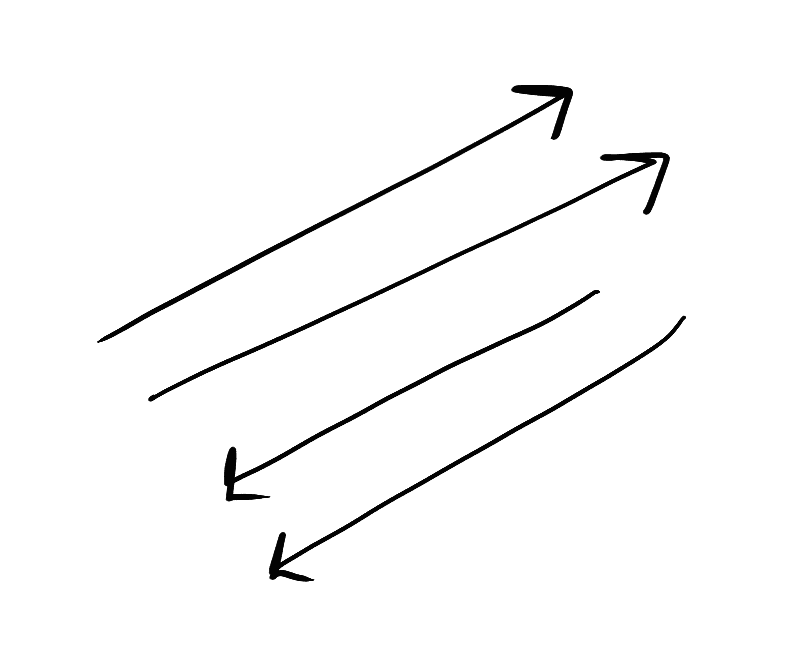
Imagine that in December 2025, instead of the launch of Opus 4.5, a shinkansen (Japanese bullet train) system was airdropped into the western United States. Every major city was immediately connected and you could get between them in 20-60 minutes.
Overnight, there would be a sort of chaos. Suddenly people would be popping back and forth from city to city for all kinds of reasons. Seattle for coffee, LA for crispy rice, etc. It would become unpredictable where to find someone because they might be anywhere at any given time. The whole system would buzz with frenetic activity as people ricocheted around the shinkansen network.22 The models themselves even have this chaotic, unfocused energy. When I’m building something, I am regularly reminding the agent to not fall down rabbit holes or get distracted with side quests. The thrust of many of my babysitting prompts is “hey, pull back from where you’ve ended up, get back on track, and keep the main thing the main thing.”
It’s easy to imagine the second order effect, too: the breathless exasperation of people talking about their experience on the new shinkansen. They’d write X articles about it, obviously.
Before the shinkansen, startups rewarded velocity, because it was one of their major competitive advantages. It used to be enough to say “let’s go really fast, and spend more time with our users than the big guys do, and good things will come out of that.”
Now, direction is more important than it was pre-shinkansen. Sunil Pai recently wrote about choosing “between several perfectly defensible directions”:
I’m just noticing that when one kind of work becomes cheap, you finally get a good look at the work hiding behind it.
The work hiding behind it is choice. It’s always been choice. And this choice—of where to direct attention—is harder when surrounded by the constant lure of the shinkansen.33 It’s harder, but it’s possible, and different companies will approach it in different ways. Zadie Smith writes in Conscience and Consciousness (an essay published in Dead and Alive, 2026) about how writers write sentences. It describes what it’s like to be an employee in different companies, which mold attention differently: “[James Baldwin and Toni Morrison]… could be describing the very same child standing on the corner and I would know the difference. The quality of attention is different. They move through my brain in a certain way.” How do you move through the brains of your employees to get them to selectively spend attention?
Historically, resources (attention) moved around when you “funded” something. But now, people don’t need a yes to start. Work is cheap. Portland is a 20 minute ride. Velocity is free.
Given that, selectivity happens further along the path: leaders ratify instead of allocate. It’s pruning after the fact and therefore a less comfortable thing to do. You have to look it in the eye, the thing you’re about to prune, instead of imagining some conceptual future possible thing. It also has to happen more often: if it used to be 10 to 1, now it’s 10,000 to 1.44 We used to reward 20% projects. As quoted from Google’s IPO letter: “We encourage our employees, in addition to their regular projects, to spend 20% of their time working on what they think will most benefit Google. This empowers them to be more creative and innovative. Many of our significant advances have happened in this manner. For example, AdSense for content and Google News were both prototyped in ‘20% time.’ Most risky projects fizzle, often teaching us something. Others succeed and become attractive businesses.” Should we still reward 20% projects?
If the shinkansen makes work cheap, why is pruning still uncomfortable? Because employees become attached to their ideas and demos, even if they’re the result of the all-night daze. Remember: it feels good. Our attachment hasn’t gone down as much as the shinkansen has sped us up.
It’s sunk cost with less “cost” but the same old love of our own ideas.
Eventually, the exhilaration of the shinkansen will wear off. But love of our own ideas might never fade, so attention matters more than ever.
- When I say this, I am usually pointing out that no matter what you say your strategy is, your real strategy is where you are spending time and attention. ↩︎
- The models themselves even have this chaotic, unfocused energy. When I’m building something, I am regularly reminding the agent to not fall down rabbit holes or get distracted with side quests. The thrust of many of my babysitting prompts is “hey, pull back from where you’ve ended up, get back on track, and keep the main thing the main thing.” ↩︎
- It’s harder, but it’s possible, and different companies will approach it in different ways. Zadie Smith writes in Conscience and Consciousness (an essay published in Dead and Alive, 2026) about how writers write sentences. It describes what it’s like to be an employee in different companies, which mold attention differently: “[James Baldwin and Toni Morrison]… could be describing the very same child standing on the corner and I would know the difference. The quality of attention is different. They move through my brain in a certain way.” How do you move through the brains of your employees to get them to selectively spend attention? ↩︎
- We used to reward 20% projects. As quoted from Google’s IPO letter: “We encourage our employees, in addition to their regular projects, to spend 20% of their time working on what they think will most benefit Google. This empowers them to be more creative and innovative. Many of our significant advances have happened in this manner. For example, AdSense for content and Google News were both prototyped in ‘20% time.’ Most risky projects fizzle, often teaching us something. Others succeed and become attractive businesses.” Should we still reward 20% projects? ↩︎